What Is Link Sculpting? Advanced SEO Guide 2026

What Is Link Sculpting? Advanced SEO Guide 2026
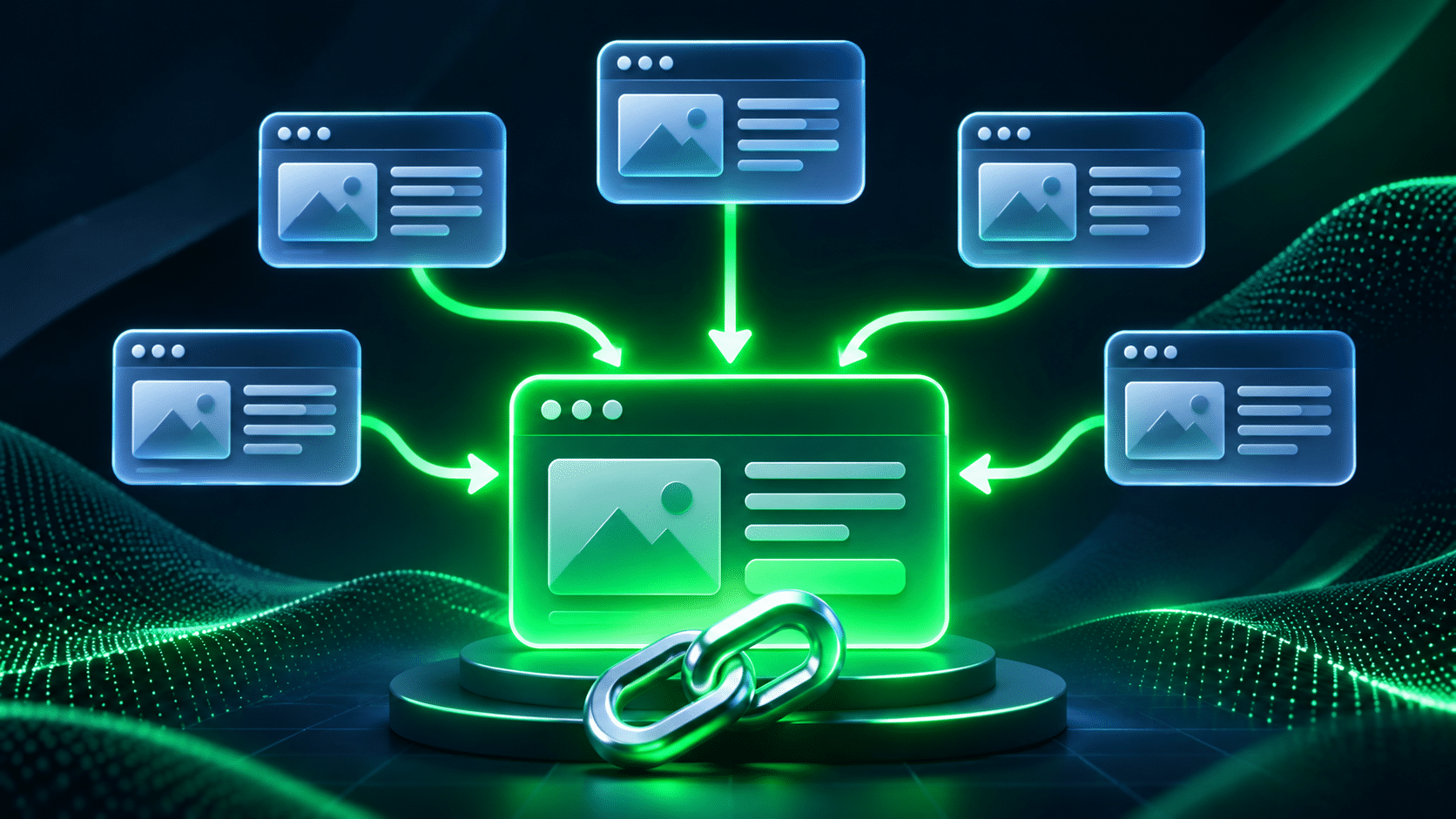
Link sculpting is an advanced SEO strategy that helps distribute PageRank, link equity, and keyword relevance throughout a website. By strategically placing internal links, you can strengthen important pages, improve topical authority, and support organic rankings.
Although many SEO professionals believe link sculpting became obsolete in 2009, the technique has simply evolved. Instead of relying on nofollow attributes, modern SEO focuses on contextual internal links, relevant anchor texts, and intelligent website architecture.
Furthermore, an effective link sculpting strategy can help businesses make better use of their existing backlinks without constantly investing in new ones.
What Is Link Sculpting?
Essentially, link sculpting is the process of strategically managing how PageRank and other link-related signals flow between pages on a website.
Traditionally, SEO professionals used nofollow attributes to control the distribution of PageRank. However, this approach is no longer considered an effective sculpting technique.
Instead, modern link sculpting focuses on distributing the following signals:
- PageRank and link equity
- Keyword relevance
- Topical authority
- Contextual relevance
- Internal link authority
- Semantic relationships between pages
For example, a website may have several informational articles that attract high-quality backlinks. By linking these articles to relevant commercial pages, the website can create stronger internal connections.
Change block type or style
Change block type or style
Move Paragraph block from position 11 up to position 10
Move Paragraph block from position 11 down to position 12
Change alignment
Change text alignment
Displays more block tools
blob:https://casinolinksmarket.com/1dd1271c-3b8d-4b2e-8e2c-81c8d07285f7Meta Boxes
Use up and down arrow keys to resize the meta box pane.
Block Heading is at the beginning of the content and can’t be moved up
Move Heading block from position 1 down to position 2
Change alignment
Change text alignment
Displays more block tools
blob:https://casinolinksmarket.com/1dd1271c-3b8d-4b2e-8e2c-81c8d07285f7Meta Boxes
Use up and down arrow keys to resize the meta box pane.
As a result, search engines may better understand which pages are important.
Additionally, this strategy can support long-tail keywords that may not naturally fit within commercial landing pages.
Matt Cutts’ Statement on PageRank Sculpting
In 2009, former Google engineer Matt Cutts explained how nofollow attributes affected PageRank distribution.
Specifically, his explanation indicated that blocking certain links with nofollow did not automatically redistribute their share of PageRank to the remaining links.
As a result, traditional nofollow-based PageRank sculpting became an unreliable SEO strategy.
However, this does not mean that strategic internal linking stopped working. In fact, Google still uses PageRank as part of its core ranking systems.
Therefore, modern link sculpting should focus on creating meaningful connections between relevant pages rather than attempting to manipulate PageRank through link attributes.
What Are Internal Links and Anchor Texts?
In simple terms, an internal link connects one page of a website to another page within the same website.
For instance, a blog post discussing guest posting may contain an internal link to a company’s guest posting service page.
Internal links help search engines discover content, understand website architecture, and identify relationships between different pages.
Furthermore, they help visitors navigate a website and discover useful information.
What Is Anchor Text?
Anchor text is the clickable text displayed within a hyperlink. In particular, it provides users and search engines with information about the destination page.
For example, if your destination page targets the keyword “guest posting services,” you could use the following anchor texts:
- Guest posting services
- Professional guest posting solutions
- High-quality guest post placements
- Relevant publisher opportunities
- Link building services
However, anchor text should always match the context of the surrounding content.
Otherwise, repeating the same keyword unnecessarily can make content appear unnatural and reduce its usefulness.
Why Contextual Internal Links Matter
Contextual internal links appear naturally within the main body of an article.
For example, consider the following two sentences:
Weak internal link: Click here to learn more.
Strong internal link: Businesses can improve their backlink profiles through relevant guest posting services.
In comparison, the second example provides considerably more context about the destination page.
Moreover, contextual internal links help readers understand why a particular resource is relevant before clicking on it.
Similarly, navigation, sidebar, and footer links contribute to website structure. Nevertheless, contextual links offer additional descriptive information through their anchor texts and surrounding content.
How to Build an Effective Link Sculpting Strategy
A successful link sculpting strategy begins with understanding your website’s existing content, backlinks, and commercial priorities.
Rather than adding internal links randomly, you should create a structured plan that connects relevant pages based on their authority and purpose.
Step 1: Identify Your Money Pages
First, identify the pages that contribute most directly to your business objectives.
These pages may include:
- Product pages
- Service landing pages
- Affiliate comparison pages
- Commercial category pages
- Lead generation pages
- Location-specific service pages
Next, assign primary and secondary target keywords to each page.
Additionally, evaluate each keyword based on search volume, competition, conversion potential, and current ranking positions.
Consequently, this process helps determine which pages should receive the most internal linking attention.
Step 2: Identify Your High-Authority Pages
Once you have identified your money pages, analyze the existing pages on your website.
In particular, look for pages that already have strong backlinks, organic traffic, or significant search visibility.
You can evaluate these pages using metrics such as:
- URL Rating (UR)
- Page Authority (PA)
- Referring domains
- Backlink quality
- Organic traffic
- Search impressions
- Existing internal links
However, third-party SEO metrics should not be treated as direct Google ranking factors. Instead, use them as comparative indicators when identifying potential internal linking opportunities.
For this purpose, tools such as Ahrefs, Semrush, Screaming Frog, and Google Search Console can help with the analysis.
Step 3: Match Page Authority With Keyword Competitiveness
Next, connect authoritative, relevant pages with your most important commercial pages.
For example, imagine that your target keyword is “casino backlinks.”
Instead of linking from an unrelated news article, you could link from a comprehensive casino SEO guide that has already earned relevant external backlinks.
As a result, the internal link provides a meaningful connection between the informational content and the commercial page.
| Supporting Page | Target Keyword | Priority |
|---|---|---|
| Complete Casino SEO Guide | Casino backlinks | High |
| iGaming SEO Statistics | iGaming backlinks | High |
| Casino Link Building Guide | Casino link building services | High |
| Guest Posting Guide | Casino guest posts | Medium |
| Digital Marketing Tips | Relevant backlink opportunities | Low |
Above all, topical relevance should remain the primary consideration when selecting internal link sources.
Advanced Link Sculpting Techniques
Basic internal linking can improve website navigation and content discovery. However, competitive industries often require a more structured approach.
Therefore, consider the following techniques when developing a scalable internal linking strategy.
1. Hierarchical Flow Control Through Topical Clusters
Generally, a well-organized website contains three important types of pages:
Money pages: These target commercial keywords and generate leads, sales, or revenue.
Supporting content: These articles target informational keywords, long-tail searches, and related customer questions.
Pillar pages: These comprehensive resources cover broader topics and connect relevant supporting articles.
For example, a website offering link building services could create a topical cluster around guest posting.
The cluster might include a complete guest posting guide, articles about guest post pricing, publisher selection guides, and a commercial guest posting service page.
Furthermore, each supporting article can link to other relevant resources within the cluster.
Consequently, search engines and visitors can better understand the relationships between these pages.
2. Anchor Text Optimization
Anchor text optimization plays an important role in modern link sculpting.
Instead of repeatedly using identical exact-match keywords, consider incorporating natural variations that accurately describe the destination page.
For example, one possible experimental anchor text distribution is:
| Anchor Text Type | Suggested Distribution |
|---|---|
| Natural, branded, and URL anchors | 65% |
| Partial-match and semantic anchors | 27% |
| Exact-match keyword anchors | 8% |
However, these percentages are not official Google recommendations. Rather, they should serve as a flexible starting point for testing.
For instance, a page targeting “link building services” could receive internal links using anchors such as “professional link building,” “backlink acquisition services,” and “relevant SEO backlinks.”
Ultimately, natural wording and contextual relevance are more important than maintaining a fixed anchor text ratio.
3. Prioritize Authoritative and Relevant Pages
Not every internal link offers the same SEO opportunity.
For example, an established industry guide with numerous relevant backlinks may be a more valuable internal link source than a newly published article with limited visibility.
Therefore, prioritize pages that combine strong authority signals with genuine topical relevance.
Additionally, identify older content that continues to attract backlinks but contains few internal links to important commercial pages.
By updating these articles, you can make better use of existing SEO assets. Moreover, you can help readers discover relevant commercial resources.
4. Use PDFs and Downloadable Resources
In addition to regular website pages, PDF documents can provide opportunities to connect users with relevant website content.
For example, businesses can include useful links within:
- Industry research reports
- Whitepapers
- Downloadable SEO guides
- Case studies
- E-books
- Educational resources
Furthermore, Google can discover and index many PDF documents, depending on their accessibility and content.
However, the exact amount of ranking credit transferred through PDF links is not publicly established.
Therefore, use these resources primarily to provide valuable information and guide readers toward relevant website pages.
5. Automate Internal Linking at Scale
Manually managing internal links may be practical for a website containing 50 pages. However, the process becomes considerably more difficult when a website contains thousands of URLs.
Fortunately, automation can simplify internal link analysis and identify relevant opportunities more efficiently.
A scalable internal linking workflow may include the following steps:
- First, crawl the website using Screaming Frog or Sitebulb.
- Next, export existing URLs, anchor texts, and internal links.
- Collect backlink and organic performance data.
- Then, group related pages into topical clusters.
- Identify high-priority commercial pages.
- Generate contextual internal link recommendations.
- Before implementation, review and approve suggested links.
- Implement approved changes through your CMS.
- Finally, monitor ranking and traffic performance.
Additionally, WordPress tools such as Link Whisper can help identify internal linking opportunities.
Nevertheless, automated recommendations should undergo quality checks before publication. Otherwise, poor automation can create irrelevant links, repetitive anchors, and a negative user experience.
Best Tools for Link Sculpting
Fortunately, several SEO tools can help you analyze and improve your website’s internal linking structure.
| Tool | Primary Purpose |
|---|---|
| Ahrefs | Backlink analysis and URL authority |
| Semrush | Keyword research and SEO auditing |
| Screaming Frog | Internal link auditing and website crawling |
| Sitebulb | Website architecture and link analysis |
| Google Search Console | Organic rankings, clicks, and impressions |
| Link Whisper | WordPress internal linking recommendations |
| InLinks | Semantic analysis and internal linking opportunities |
For smaller websites, Google Search Console and Screaming Frog may provide enough information to begin.
On the other hand, larger websites may benefit from combining multiple data sources with custom automation.
Moreover, using these tools together can help identify internal linking opportunities that individual reports might overlook.
Common Link Sculpting Mistakes to Avoid
Although link sculpting can strengthen your SEO strategy, incorrect implementation may reduce its effectiveness.
In particular, you should avoid the following mistakes:
- Adding irrelevant internal links.
- Excessively repeating exact-match anchor texts.
- Linking to broken or redirected URLs.
- Ignoring orphan pages.
- Linking to non-indexable pages unnecessarily.
- Prioritizing authority metrics over topical relevance.
- Adding excessive internal links without a clear purpose.
- Using nofollow attributes to manipulate internal PageRank.
- Automatically inserting links without quality checks.
Furthermore, avoid removing useful navigation links simply because they do not point toward commercial pages.
Ultimately, a successful internal linking strategy should support both search engine understanding and user experience.
Is Link Sculpting Safe for SEO?
Strategic internal linking is a legitimate SEO practice when it helps users navigate a website and understand relationships between pages.
In fact, Google recommends using crawlable links and descriptive anchor text.
However, link sculpting should not be confused with manipulative external link schemes or artificial attempts to exploit another website’s ranking signals.
For additional guidance, refer to Google’s SEO link best practices and Google’s Search ranking systems guide.
As a result, businesses that follow these recommendations can develop a sustainable internal linking strategy that supports long-term SEO performance.
Frequently Asked Questions
What is link sculpting in SEO?
Essentially, link sculpting is the strategic organization of internal links to distribute link equity, establish topical relationships, and support important pages within a website.
Does link sculpting still work in 2026?
Yes. Modern link sculpting relies on contextual internal linking, descriptive anchor texts, and logical website architecture rather than outdated nofollow techniques.
However, its effectiveness depends on content quality, relevance, competition, and other ranking factors.
Is link sculpting the same as PageRank sculpting?
Traditionally, PageRank sculpting referred to controlling PageRank distribution, often through nofollow attributes.
In contrast, modern link sculpting takes a broader approach by considering keyword relevance, topical authority, and website structure.
How many internal links should an article have?
There is no universal number of internal links that every article should contain.
Instead, include links wherever they provide meaningful context, help readers, and connect relevant resources.
Can internal linking improve keyword rankings?
Internal linking can help search engines discover pages, understand their importance, and interpret topical relationships.
Nevertheless, internal links alone cannot guarantee higher keyword rankings.
Can I automate link sculpting?
Yes. SEO tools, WordPress plugins, and custom automation systems can identify and implement internal linking opportunities.
However, human review is recommended to maintain contextual relevance and content quality.
Final Thoughts
Link sculpting has evolved from a technical PageRank manipulation technique into a strategic approach to website architecture and internal linking.
Therefore, rather than treating internal links as an afterthought, businesses should consider them an essential part of their overall SEO strategy.
Furthermore, combining relevant supporting content, authoritative pages, and descriptive anchor texts can help establish stronger topical connections throughout a website.
Similarly, businesses operating in competitive industries can use an effective link sculpting strategy to make better use of existing content and backlink investments.
Ultimately, the goal is not simply to add more internal links. Instead, it is to create meaningful connections between the right pages, using the right anchors, in the right context.
In conclusion, by implementing these principles consistently, you can build a more accessible, organized, and search-friendly website.