Backlinks Explained: How Quality Links Build SEO Authority in 2026

Imagine publishing a genuinely useful article on your website. It answers an important question, includes accurate information, and offers something readers cannot easily find elsewhere.
Yet weeks pass, and very few people discover it.
Now imagine an established industry publication references that article while explaining the same topic. Some readers click through. Search engines discover another connection between your page and its subject. Your business reaches an audience that may never have encountered your website otherwise.
That connection is a backlink.
Understanding what backlinks are is one of the foundations of search engine optimization. But building a successful backlink strategy requires more than collecting links from websites with impressive-looking metrics.
In 2026, the important questions are not simply how many backlinks you have, but where they come from, why they exist, whether they help readers, and how they contribute to your wider SEO strategy.
This guide explains backlinks from a practical perspective and shows how to assess their quality, earn meaningful mentions, and measure results without relying on outdated link-building shortcuts.
1. A Backlink Is More Than a Link Between Two Websites
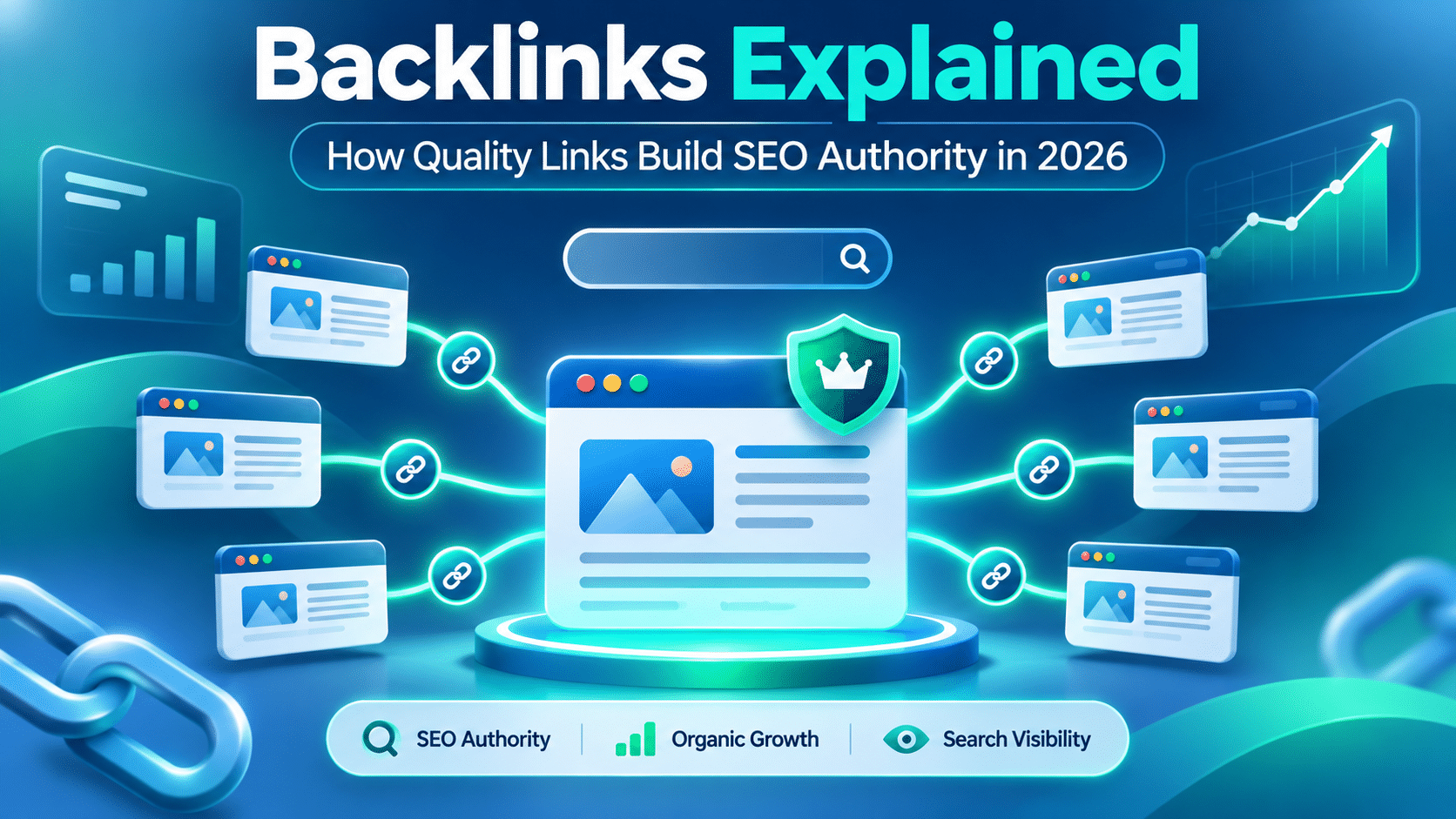
A backlink is a clickable hyperlink on one website that points to a page on another website.
For example, suppose an online marketing publication writes an article about content strategy and references a detailed keyword research guide from another company.
The link connecting the publication to that guide is a backlink for the company receiving it.
Backlinks are also called inbound links or incoming links.
They differ from internal links, which connect two pages within the same website.
But the technical definition tells only part of the story.
A backlink can serve several purposes simultaneously:
- It gives readers access to additional information.
- It connects related subjects across different websites.
- It helps search engines discover content.
- It may contribute signals used by search ranking systems.
- It introduces a business or publication to new audiences.
Think of backlinks as connections within a larger information network, rather than digital trophies that websites collect.
The strongest links generally exist for a clear reason: they help people navigate from one useful resource to another.
2. Why Backlinks Continue to Matter for SEO
Search engines evaluate web pages using many different signals. Links are one of the ways they discover pages and understand relationships between online resources.
A backlink cannot guarantee a first-page ranking, but a relevant, credible link can contribute to broader search visibility.
They Help Search Engines Discover Content
Search engines crawl the web by following accessible links and using other discovery methods, such as sitemaps.
When an established website links to a newer resource, that link provides another route through which search crawlers may encounter the page.
This does not guarantee immediate indexing. Google still needs to evaluate the page, and inclusion in search results is not automatic.
Nevertheless, creating accessible pathways to valuable content remains an important part of technical and off-page SEO.
They Provide Context About Your Content
Links can communicate relationships between topics.
Imagine a cybersecurity publication referencing a guide about protecting online accounts. The surrounding article, linking page, and anchor text may all help explain why the referenced guide is relevant.
A backlink from an unrelated page does not provide the same clear topical connection.
This is why relevance matters when evaluating link opportunities.
They Can Contribute to Ranking Signals
Google has historically used link analysis, including PageRank, in its search systems.
Links can help search systems evaluate relationships and signals associated with pages, but ranking also depends on content relevance, usefulness, technical accessibility, and numerous other factors.
There is no dependable formula stating that a particular number of backlinks will produce a particular ranking position.
The practical lesson is straightforward: build a website worth recommending, then earn appropriate visibility from relevant sources.
They Can Bring Visitors Directly to Your Website
One of the most useful benefits of backlinks is often overlooked: referral traffic.
Suppose a SaaS comparison website links to a helpful guide on your company website.
Readers who are already interested in that subject may follow the link to learn more.
Some may become newsletter subscribers, request demonstrations, or eventually become customers.
Even when a backlink provides limited SEO value, it can still produce meaningful business exposure.
They Support Brand Discovery
Being mentioned by a relevant publication introduces your brand to people who might not know it exists.
Over time, useful mentions can contribute to awareness, familiarity, and opportunities for additional editorial coverage.
These benefits are worth measuring separately from search rankings.
3. The Four Questions Behind Every Useful Backlink
Instead of evaluating backlinks using a single metric, start with four basic questions.
Who Is Linking?
Examine the website providing the link.
Does it publish original material? Does it have a recognizable audience? Does its editorial content make sense for your industry?
A real publication with a focused readership may offer more practical value than a large, unfocused website.
Why Is the Link There?
A link should have a meaningful role within the content.
If an article about email marketing references a detailed email deliverability guide, the connection makes sense.
If that same article suddenly links to an unrelated product page, the placement may feel unnatural to readers.
What Surrounds the Link?
A backlink does not exist in isolation.
The paragraph, subject matter, heading structure, and overall quality of the linking page all form its context.
Relevant editorial placement is generally more useful than a link inserted without explanation.
Where Does the Link Lead?
The destination is just as important as the source.
A useful backlink should lead to a page that satisfies the reader’s expectations.
For example, a paragraph discussing website security should ideally reference an informative security resource, not an unrelated sales page.
Good link building starts by matching the right destination with the right audience.
4. How to Recognize a High-Quality Backlink
Website owners often rely on Domain Rating (DR) or Domain Authority (DA) when researching backlink opportunities.
These metrics can help with preliminary comparisons, but they are created by third-party SEO platforms. They are not Google’s own ranking scores.
A better evaluation considers multiple characteristics.
| Quality Signal | What to Check |
|---|---|
| Topical relevance | Does the website regularly discuss related subjects? |
| Editorial quality | Are articles original, useful, and maintained? |
| Organic visibility | Does the website appear to attract relevant search traffic? |
| Audience location | Are readers located in markets your business serves? |
| Placement context | Does the link fit naturally within useful content? |
| Website reputation | Does the publication have a credible identity and publishing history? |
| Link transparency | Are sponsored or commercial links properly identified? |
Why Traffic Quality Matters More Than Traffic Numbers Alone
Consider two hypothetical websites.
Website A has impressive authority metrics and substantial estimated traffic, but most visitors arrive through content unrelated to your industry.
Website B has more modest metrics but consistently publishes detailed articles covering the exact problems your potential customers face.
Website B might deliver more qualified referral visitors and a more meaningful audience connection.
This does not mean that smaller websites always outperform larger publications.
It means that audience fit and editorial context deserve attention alongside numerical metrics.
A sensible backlink strategy balances relevance, readership, content quality, and business objectives.
5. Understanding Different Backlink Relationships
Not every backlink is created through the same process.
Some are editorial recommendations. Others appear through professional contributions, partnerships, sponsorships, or community participation.
Understanding these differences helps you evaluate both value and risk.
Naturally Earned Editorial Links
These occur when a publisher independently decides to reference your content.
For example, an industry writer may link to an original survey, technical guide, research report, or useful tool.
The connection exists because the destination offers something relevant to the article.
Creating original resources that others want to reference is one of the most sustainable ways to attract these mentions.
Guest Contributions
A guest contribution is content written by an external contributor for another publication.
It can introduce expertise to a new audience, establish professional relationships, and create opportunities for appropriate attribution.
However, a guest article should provide standalone editorial value.
Mass-producing articles primarily to manipulate search rankings, particularly with optimized anchor text, can violate search engine spam policies.
Contextual Links in Existing Articles
Sometimes a publisher updates an existing article to reference a new, relevant resource.
For example, a dated guide may benefit from linking to current research or improved technical documentation.
The update should genuinely strengthen the original article.
Simply inserting paid links into older pages does not automatically make them valuable or compliant with search guidelines.
Sponsored and Advertising Links
Commercial partnerships can help businesses reach relevant audiences.
Google allows advertising and sponsorship relationships, but paid links should be appropriately qualified.
For sponsored placements, Google recommends the rel="sponsored" attribute; rel="nofollow" is also acceptable.
These attributes help distinguish advertising relationships from ordinary editorial recommendations.
Community and User-Generated Links
Forums, discussion platforms, and community websites can generate referral traffic when participants share helpful resources.
However, posting irrelevant promotional links or participating in automated comment spam is not a sustainable SEO strategy.
Community participation should prioritize answering questions and providing value.
6. Follow a Link Quality Framework Instead of Chasing Metrics
At Casino Links Market, an important principle when assessing backlink opportunities is to look beyond surface-level numbers and evaluate the context in which a placement would appear.
The following practical scoring framework can help organize that review.
It is an editorial decision-making tool, not a representation of Google’s ranking algorithm.
Score each factor from 0 to 2:
- Topical relevance: 0 = unrelated; 1 = partially related; 2 = strongly related.
- Content quality: 0 = poor; 1 = mixed; 2 = consistently useful.
- Audience fit: 0 = unsuitable; 1 = broad; 2 = closely aligned.
- Organic visibility: 0 = little visible evidence; 1 = moderate; 2 = credible relevant visibility.
- Editorial integrity: 0 = concerning; 1 = uncertain; 2 = clear editorial standards.
- Placement usefulness: 0 = forced; 1 = acceptable; 2 = directly helpful.
- Link transparency: 0 = problematic; 1 = unclear; 2 = appropriately disclosed and qualified.
The maximum possible score is 14.
A higher score can help prioritize manual review, but it should never automatically approve a website. Serious warning signs, especially link manipulation or deceptive publishing practices, should override the numerical result.
The purpose of the framework is to make decisions more consistent and explainable.
7. Build Links Around Resources People Actually Need
A common mistake is beginning a link-building campaign by searching for websites willing to provide links.
A stronger approach begins with the destination.
Ask yourself: What content on my website deserves to be referenced?
A resource is more likely to attract useful citations when it solves a specific problem or provides information that is difficult to replace.
Publish Original Research
Surveys, carefully documented experiments, data studies, and original market analysis can give journalists and bloggers a reason to cite your website.
For example, a digital marketing company could publish research about changes in website performance across different industries.
Any statistics should be supported by real methods and accurately described.
Create Practical Tools and Templates
Interactive calculators, checklists, spreadsheets, comparison tools, and technical templates can attract attention when they save readers time.
A useful backlink audit checklist might be more valuable to an SEO audience than another generic article repeating familiar definitions.
Answer Difficult Industry Questions
Detailed tutorials can earn attention when they resolve complex problems clearly.
Examples include diagnosing crawl issues, comparing analytical methods, or explaining how to evaluate publisher quality.
Focus on helping readers make better decisions.
Keep Existing Resources Updated
An outdated resource becomes less useful over time.
Review important articles periodically, check sources, remove obsolete recommendations, and clarify new developments.
A dependable resource can remain relevant for years when properly maintained.
8. A Practical Backlink Strategy for 2026
Building a healthy backlink profile is an ongoing process rather than a single campaign.
Here is a structured approach.
Phase One: Understand Your Current Position
Begin with a review of your website.
Identify the pages receiving search traffic, the content attracting references, and the important pages that lack visibility.
Use Google Search Console alongside analytics and reputable third-party backlink tools.
This creates a baseline for future evaluation.
Phase Two: Research Your Audience and Competitors
Study publications that your target audience already reads.
Review which resources competitors are being cited for and ask what information those resources provide.
Avoid copying competitors’ backlink profiles mechanically.
Instead, look for gaps where you could publish something genuinely more helpful.
Phase Three: Build a Relevant Publisher Shortlist
Create a shortlist of publications with credible editorial standards, suitable audiences, and related subject matter.
Check individual articles rather than evaluating only domain-level metrics.
A publisher should make sense for your content even before any discussion about links.
Phase Four: Make a Useful Editorial Pitch
Outreach works best when it is specific.
Explain why your resource could help the publication’s readers.
For instance, if an editor has published a guide on technical SEO, you might suggest an original crawl-diagnostics resource that adds information not already covered.
A good outreach message respects the editor’s judgment. It does not assume that a link is owed.
Phase Five: Verify the Published Result
When a publication mentions your resource, inspect the live page.
Confirm that the content is accurate, the destination works, and the placement makes sense.
For commercial arrangements, verify that appropriate disclosures and link attributes are used.
Maintain a record of publishing dates, destinations, and relevant performance observations.
9. Common Backlink Mistakes That Waste Time and Budget
Backlink campaigns can produce disappointing results when businesses prioritize quantity without examining quality.
Watch for these recurring problems.
Choosing websites based only on DR: Third-party authority scores cannot fully represent editorial credibility, audience relevance, or future SEO performance.
Ignoring the topic of the linking page: A high-traffic website can still be an unsuitable source if the content has no meaningful connection with your destination.
Repeating the same exact-match anchor text: Excessively optimized anchor patterns can indicate manipulative link-building practices.
Using low-quality guest-post networks: Large collections of thin articles written primarily to place links may create spam risks rather than long-term value.
Assuming every link transfers ranking value: Link attributes, Google systems, page quality, and other factors influence how links may be treated.
Buying rankings rather than building exposure: No provider can reliably guarantee a specific Google ranking simply by supplying a set number of backlinks.
Neglecting your own website: Backlinks cannot compensate for every problem involving weak content, confusing architecture, poor usability, or technical accessibility.
The goal should be an effective overall SEO strategy, not an impressive-looking link count.
10. How to Measure Whether Your Backlinks Are Working
A campaign should be judged using more than the number of links acquired.
Different metrics reveal different outcomes.
Search Visibility
Use Google Search Console to monitor impressions, clicks, and relevant search queries.
Compare performance before and after your content and promotion activities.
Remember that changes may also result from new content, competitors, search demand, or algorithm updates.
Referral Traffic
Check your analytics platform to see whether visitors arrive from referring websites.
Review engagement and conversions, not simply visits.
A small number of highly relevant visitors may generate more business value than a large volume of uninterested traffic.
Referring Website Diversity
Evaluate which independent websites are linking to your content.
A range of relevant editorial references may provide broader exposure than numerous links from the same source.
Again, diversity alone does not guarantee ranking improvements.
Business Outcomes
For commercial websites, examine the outcomes that matter most.
These might include qualified inquiries, product demonstrations, newsletter subscriptions, partnership requests, or sales.
Link building should support a measurable business objective.
Content Performance Over Time
Monitor whether your most useful resources continue to attract references.
This can reveal the subjects and formats that resonate with your audience.
Use those findings to guide future content investment.
11. What About Backlinks and AI Search Visibility?
Search discovery is changing as AI-generated answers, conversational search, and traditional search results increasingly coexist.
This raises an understandable question: do backlinks influence visibility in AI-driven discovery?
The answer requires some care.
Links can help publishers and search systems discover resources, while editorial mentions can broaden the online presence of a brand.
However, the precise role backlinks play in individual AI answer-generation systems is not fully public, and claims of guaranteed AI citations from link purchases are not justified.
Businesses should focus on publishing accurate, well-structured information, establishing clear entity and brand identities, and earning legitimate references from relevant sources.
These actions support discoverability and credibility without depending on speculative ranking formulas.
The principle remains consistent: a genuinely useful resource has more lasting value than a manufactured appearance of popularity.
12. Backlink Quality Is Especially Important in Competitive Niches
Some industries face additional challenges when building search visibility.
Examples include financial services, health-related businesses, highly competitive software markets, and regulated gaming sectors.
In these industries, credibility, audience appropriateness, content accuracy, and applicable local rules deserve particular attention.
For casino and betting-related businesses, publisher acceptance policies may vary considerably.
A publication accepting general marketing content does not necessarily accept gambling-related contributions or commercial promotions.
Before pursuing a placement, review the publisher’s editorial requirements, relevant advertising restrictions, the target audience, and any applicable jurisdictional obligations.
A thoughtful approach protects both the publisher relationship and the reputation of the business being promoted.
13. Frequently Asked Questions
What are backlinks in simple terms?
Backlinks are hyperlinks from another website to your website. They help users move between related resources and can provide signals that search engines use when discovering and evaluating pages.
Are backlinks still important for SEO in 2026?
Yes. Links remain relevant to web discovery and search systems, although SEO performance depends on many factors. Quality content, technical accessibility, relevance, and user experience remain important alongside backlinks.
How many backlinks does a website need to rank?
There is no universal number. The competitive landscape, search intent, quality of the page, strength of other ranking signals, and characteristics of competing resources all influence outcomes.
Is a high-DR backlink always valuable?
No. Domain Rating is a third-party metric. A backlink should also be evaluated for editorial quality, topical relevance, audience fit, placement context, and appropriate link treatment.
What is the difference between follow and nofollow links?
An ordinary link without a qualifying attribute may be considered by search engines for ranking-related purposes. nofollow signals that the publisher does not want to imply the same endorsement. Google treats qualifying attributes as hints rather than simple universal on/off switches.
Can buying backlinks harm SEO?
Paid links intended to manipulate search rankings can violate Google’s spam policies. Advertising and sponsored placements can be legitimate when links are properly qualified and other relevant requirements are followed.
How long does it take to see results from backlinks?
There is no fixed timeline. Discovery, crawling, indexing, competition, content changes, and broader search conditions can affect results. A single new backlink may produce no measurable ranking change.
Final Thoughts: Build Connections That Deserve to Exist
Backlinks remain an important part of the web’s information structure.
They can connect readers with helpful resources, introduce businesses to new audiences, and contribute signals that search engines use to understand online content.
But link building becomes more effective when the objective shifts from accumulating URLs to creating meaningful connections.
Start with content worth referencing. Identify publications that genuinely serve your audience. Evaluate the quality and context of each opportunity, and measure results using business-focused metrics.
A strong backlink strategy is not built around shortcuts or ranking guarantees.
It is built around relevance, credibility, useful content, and long-term visibility.
Explore Relevant Publisher Opportunities with Casino Links Market
Finding appropriate publications can require significant research, particularly in competitive and specialized industries.
Casino Links Market helps businesses and SEO professionals explore publisher opportunities and assess their suitability for content marketing and outreach campaigns.
Whether you are researching guest contribution opportunities, evaluating website metrics, or planning a broader off-page SEO strategy, start by prioritizing relevant audiences and responsible publishing practices.